


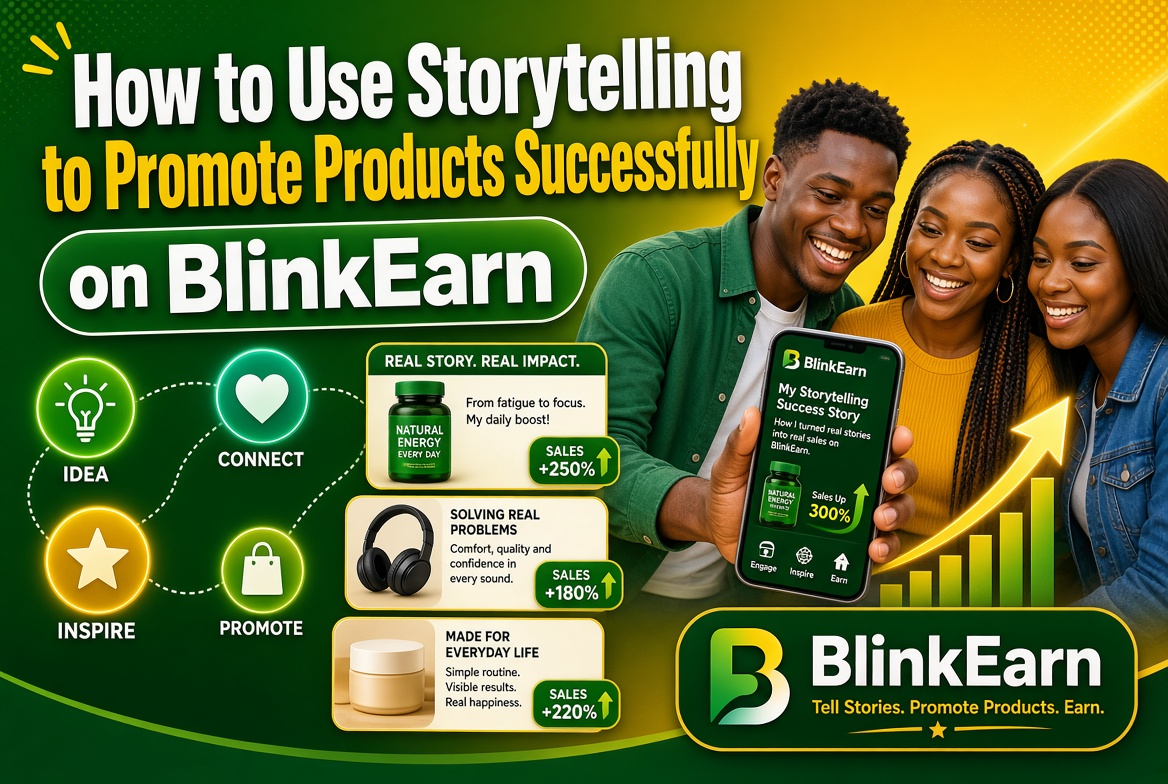
In the world of online marketing, people are constantly exposed to advertisements, product links, and promotional messages. Because of this, simply telling people to buy a product may not always be enough to capture their attention.
One effective way to make your promotions more engaging is through storytelling.
Storytelling helps you connect products with real-life situations, challenges, goals, and experiences. Instead of focusing only on what a product offers, you show your audience why the product may matter to them.
For BlinkEarn affiliates, storytelling can be a useful strategy for creating meaningful content, building trust, and promoting relevant products more naturally.
What Is Storytelling in Affiliate Marketing?
Storytelling in affiliate marketing means using a simple narrative to explain a problem, experience, lesson, or transformation connected to a product.
For example, instead of posting:
“Buy this digital product today.”
You could share a story about someone who struggled with a particular challenge, discovered useful information, and began taking steps toward improvement.
The story can then introduce a relevant BlinkEarn product as a possible resource.
The goal is not to create false experiences or exaggerate results. It is to communicate product value in a way that feels relatable and useful.
1. Start With a Problem Your Audience Understands
Strong stories often begin with a familiar problem.
Think about the challenges your target audience may be facing.
They might be struggling to:
- Learn a new digital skill
- Start an online business
- Improve their productivity
- Understand affiliate marketing
- Manage their personal finances
- Develop a valuable career skill
When your story begins with a problem your audience recognizes, they are more likely to pay attention.
For example, you could create a post about a beginner who wants to learn a digital skill but does not know where to start. You can then introduce a relevant product that may help the person begin learning.
2. Make Your Story Relatable
Your audience should be able to see themselves in the story.
Use simple language and everyday situations. Avoid making every story sound perfect or unrealistic.
You can discuss common experiences such as uncertainty, lack of knowledge, limited time, or the fear of starting something new.
Relatable stories help your audience feel understood. They also make your promotional content more human and less like a traditional advertisement.
3. Show the Value of the Product
A good story should connect naturally to the product you are promoting.
After introducing the problem, explain how the product may help address it.
For example, if you are promoting a digital marketing guide on BlinkEarn, your story could focus on someone who wants to promote products online but struggles to create effective content.
You can explain how a relevant guide may help the person understand content creation, audience engagement, or promotional strategies.
Focus on the actual benefits of the product and avoid promising guaranteed results.
4. Use Your Own Learning Experience
If you have personally used or studied a product, you can share what you learned from it.
Personal experiences can make your content more credible, provided you remain honest.
You might explain:
- Why you became interested in the product
- What problem you wanted to solve
- What you learned from the experience
- Who may find the product useful
- What beginners should consider before purchasing
If you have not personally used the product, do not pretend that you have. Instead, describe its purpose accurately and explain who may benefit from it.
5. Create Different Types of Stories
Storytelling does not always require a long article. You can use different formats depending on your platform.
Examples include:
Short Social Media Stories
Share a quick problem, lesson, and product recommendation through WhatsApp status, Facebook, or Instagram.
Educational Stories
Explain how someone can move from confusion to understanding by learning a particular skill.
Customer-Focused Stories
Describe a common customer challenge and introduce a product that may provide useful information or support.
Personal Growth Stories
Share your journey of learning affiliate marketing, improving your content, or becoming more consistent.
Different story formats allow you to keep your content fresh and engage your audience in different ways.
6. End With a Clear Call to Action
After telling your story, guide your audience toward the next step.
Your call to action could encourage them to:
- Learn more about the product
- Visit your BlinkEarn product link
- Ask a question
- Read more information
- Explore related learning resources
Keep the call to action simple and relevant to the story.
For example:
“If you are ready to start learning this skill, explore the recommended resource through my BlinkEarn link.”
Build Trust Through Honest Storytelling
Storytelling can help BlinkEarn affiliates create stronger connections with their audiences, but honesty should always come first.
Do not invent customer experiences, fake testimonials, or make claims that a product cannot support. A good story should inform and guide people rather than pressure them into buying.
When your content is useful, relatable, and truthful, your audience has more reason to trust your recommendations.
Turn Stories Into Opportunities With BlinkEarn
Storytelling gives you a way to promote products without making every post sound like a sales announcement. By focusing on real problems, relatable experiences, useful lessons, and relevant solutions, you can create content that attracts attention and encourages meaningful engagement.
As a BlinkEarn affiliate, practice telling simple stories that educate your audience and connect naturally to the products you promote.
Tell a useful story, provide genuine value, and make every BlinkEarn promotion an opportunity to connect with the right audience.